 Lavare Journal
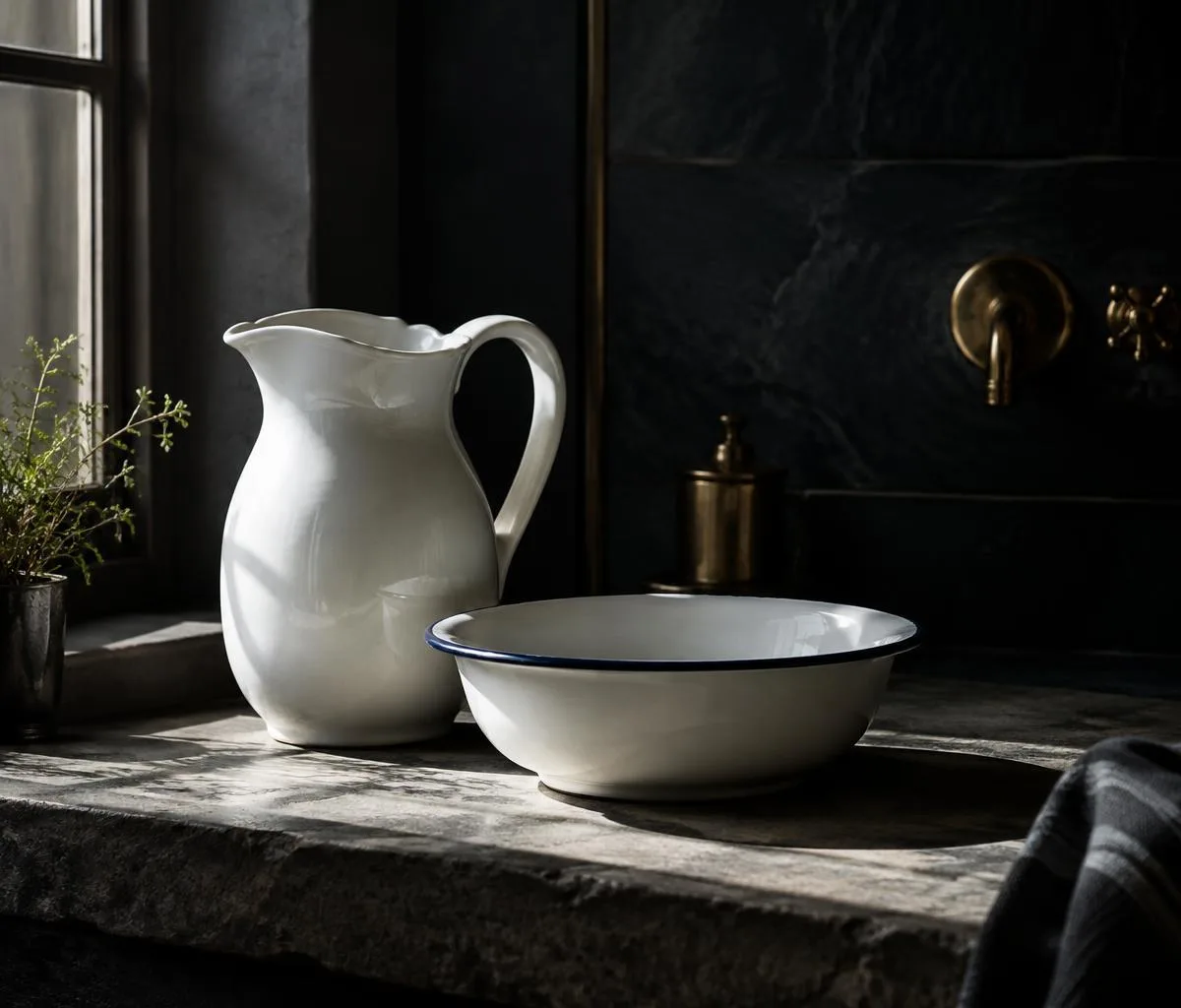
You will master the balance between dissolved mineral salts and traditional washing compounds in your daily bath. Learn how simple acid rinses keep tub porcelain clean and stop curd from clinging to your skin.

- Calcium ions bond directly with saponified tallow and vegetable fats to create curd.
- Dilute citric acid dissolves mineral crust without damaging enamel or skin integrity.
- Washing with warm rather than scalding water reduces mineral scale adhesion.
When we draw a hot bath in a district fed by deep limestone aquifers, the water carries dissolved minerals gathered through subterranean rock. At first sight, the surface looks clear, catching the morning light with a pale blue cast. Yet as the steam rises and the water mingles with an oil-rich bar of cold-process soap, the texture changes. The lather does not billow into light, airy froth; instead, it thickens into a low, milky film. After the plug is pulled and the tub drains, an opaque ring adheres to the sloped walls of the tub, clinging stubbornly to cast-iron enamel, brass wastes, and unglazed tile edges.
This persistent gray residue is not dirt, nor is it a sign of inferior soapmaking. It is the tangible result of basic inorganic chemistry unfolding across warm surfaces. In our studio and washrooms, we have spent years studying how dissolved calcium and magnesium interact with fatty acids, plant oils, and fixture glazes. Managing this tactile byproduct requires neither aggressive synthetic detergents nor harsh industrial solvents. Rather, it demands an understanding of mineral reactivity, a thoughtful adjustment of our washing recipes, and deliberate physical routines for maintaining the basins we cherish.
The Chemistry of Hard Water Curd
To grasp why hard water coats a tub, we must look at what happens when traditional soap dissolves in mineral-laden water. True soap consists of alkali salts of fatty acids, typically sodium stearate, sodium palmitate, and sodium oleate. When we rub a bar of soap between wet palms, these sodium ions detach in water, freeing the fatty acid chains to bind with body oils and lift away grime. However, when the supply water contains elevated concentrations of bivalent mineral ions, specifically calcium (Ca2+) and magnesium (Mg2+), the chemical balance shifts instantly.
These divalent cations possess a far stronger electrostatic pull than monovalent sodium ions. The calcium ions swiftly displace the sodium, binding two long-chain fatty acid molecules together. The resulting compounds, primarily calcium stearate and calcium palmitate, possess no electrical charge that allows them to disperse in water. Instead of rinsing away as soluble lather, they precipitate out of the liquid as an insoluble, gummy solid historically known as lime curd, or bath scum.
This curd behaves differently from dry mineral scale. Scale, which is pure calcium carbonate (CaCO3), precipitates when heat drives dissolved carbon dioxide out of calcium bicarbonate solutions, forming a brittle, chalky crust inside kettles and hot-water lines. Soap curd, by contrast, is a hybrid material: roughly 65 percent mineral-bound fatty salts and 35 percent free oils, skin flakes, and ambient dust. Because it contains lipophilic fats, it adheres tenaciously to smooth, cool surfaces like porcelain and vitreous china, setting like soft wax as the basin cools.
| Residue Type | Primary Chemical Composition | Physical Characteristics | Solvent Mechanism |
|---|---|---|---|
| Limescale | Calcium carbonate, magnesium carbonate | Chalky, brittle, rough crystalline structure | Dissolved by mild dilute acids |
| Soap Curd | Calcium and magnesium stearate/oleate | Waxy, sticky, water-repellent film | Weakened by chelators, lifted by mild friction and surfactants |
| Mineral Tint | Iron oxides, manganese trace salts | Reddish-brown or dark brown streaks | Targeted reduction by mild organic acids like oxalic or citric |
Testing Local Water Hardness with Strips
Before adjusting formulas or scouring regimens, we determine the exact mineral load of the tap water. Water hardness is usually recorded in either parts per million (ppm) of calcium carbonate equivalent, or in grains per gallon (gpg), where one grain equals roughly 17.1 ppm. Knowing these figures allows us to tailor rinse baths and formulation tweaks rather than working blindly.
While laboratory titration using ethylenediaminetetraacetic acid gives the most exact measurement, simple colorimetric test strips provide enough precision for household and workshop management. These strips use paper pads impregnated with a chelating agent and a dye indicator, often calmagite or eriochrome black T, which changes color across a calibrated scale as it binds dissolved magnesium and calcium.
To obtain an accurate reading from your bathroom tap, follow this basic sequence:
- Purge the line: Open the cold tap fully for 45 seconds to flush water that has sat stagnant within copper or plastic domestic pipes. This guarantees you sample the true municipal or well supply.
- Collect a clean sample: Draw approximately 120 milliliters of water into a thoroughly rinsed glass tumbler. Do not use metal or glazed ceramic vessels, which might leach trace ions.
- Submerge the test strip: Dip the test strip into the water for a single second, ensuring all reactive pads are submerged. Avoid swishing it vigorously, which can wash out the dry reagents.
- Shake and wait: Remove the strip, flick it once gently to shed excess droplets, and hold it horizontally in room-temperature air for 30 seconds.
- Compare against the reference card: Match the pad color to the manufacturer color chart under natural, indirect light.
Water measuring below 60 ppm (under 3.5 gpg) is considered soft and creates minimal curd. Water between 61 and 120 ppm is moderately hard, producing noticeable rings only after several uses. Readings between 121 and 180 ppm represent hard water where scum forms rapidly, while supplies exceeding 180 ppm (roughly 10.5 gpg) represent very hard water. At these higher ranges, traditional soap lather collapses almost immediately unless the bath recipe is altered.
Adjusting Soap Formulations for Hard Regions
For those of us who formulate our own bar soaps, cold-process batches can be adapted to resist mineral curdling. When we craft bars meant for hard-water regions, we focus on two strategies: selecting fatty acid profiles that yield more soluble salts, and introducing natural chelating agents directly into the lye water before saponification.
First, we alter our oil ratios. Long-chain saturated fats, such as the stearic and palmitic acids dominant in tallow, lard, and palm oil, form exceptionally dense, insoluble curds in hard water. In contrast, short- and medium-chain fatty acids, like the lauric and myristic acids found in coconut and babassu oils, produce water-soluble salts that tolerate divalent ions much better. By increasing coconut oil to 28 or 32 percent of the oil weight, lather remains stable even in mineral-heavy water. To temper the drying tendencies of high-coconut soaps, we blend in castor oil at 7 to 9 percent. Castor oil consists primarily of ricinoleic acid, an unsaturated fatty acid with a hydroxyl group that helps maintain rich, dense bubbles despite mineral interference.
Second, we employ natural chelators during mixing. A chelator binds calcium and magnesium ions before they can attack the soap molecules. The most reliable additive for hand-crafted bars is sodium citrate, the sodium salt of citric acid. When dissolved into the water before adding sodium hydroxide, citric acid neutralizes a small portion of the lye to form sodium citrate in situ.
- Citric acid addition: We measure out between 15 and 20 grams of powdered citric acid per 1000 grams of total oils.
- Lye adjustment: Because each gram of citric acid neutralizes approximately 0.624 grams of sodium hydroxide, we calculate extra sodium hydroxide to ensure the target superfat percentage remains unaffected.
- Dissolution: Stir the citric acid crystals into room-temperature distilled water until completely transparent before sprinkling in the lye beads.
Another maker-friendly option is sodium gluconate, derived from the fermentation of glucose. Added at 0.5 to 1.5 percent of total oil weight, sodium gluconate offers remarkable sequestering power across a broad pH range, keeping bars lathering freely and leaving tub surfaces notably cleaner after rinsing.
Acidic Rinses for Skin and Enamelware
When hard water curd deposits onto skin, hair, or enamel finishes, standard tap water cannot rinse it away. Because calcium soap curd is insoluble in neutral or alkaline water, applying more soap or fresh water simply adds mineral volume. The practical countermeasure is a mild, organic acid rinse. Weak acids protonate the fatty acid molecules, breaking the ionic bond between the fatty chains and the calcium. The mineral reverts to a water-soluble salt, while the fatty acid softens and washes away.
For the body, an acidic bath wash restores the natural acid mantle, which hard alkaline water routinely disrupts. We mix raw, unfiltered apple cider vinegar or food-grade citric acid into warm water. For skin application, keep the concentration subtle: roughly 15 milliliters of vinegar per liter of warm water, or 3 grams of citric acid crystals dissolved in the same volume. Poured slowly over the shoulders and limbs after soaping, this rinse leaves skin supple and prevents the tight, itchy sensation that dry calcium curd produces when it settles into pores.
For enamel and tile surfaces, a slightly stronger acid solution is required, though caution is paramount. Vitreous enamel consists of an inorganic glass layer fused to cast iron at temperatures above 800 degrees Celsius. While it resists mild acids, strong industrial mineral acids will dull the high gloss permanently through microscopic etching. Never use muriatic or strong sulfamic acid on bath fixtures.
To safely dissolve scum rings on cast iron and glazed ceramic basins:
- Dissolve 45 grams of citric acid powder into 500 milliliters of warm tap water inside a spray bottle.
- Mist the solution onto the tub ring, allowing it to sit undisturbed for 8 to 12 minutes. This contact period lets the weak acid loosen the calcium lattice without etching the underlying glass glaze.
- Wipe the surface with a coarse linen rag or a dense cellulose sponge soaked in warm water.
- Rinse the area thoroughly with fresh water to clear away all acid residues.
Note that natural stones, such as honed Carrara marble, travertine, and limestone, are composed entirely of calcium carbonate. Applying acidic sprays to these surfaces will cause immediate, irreversible etching. Where marble surrounds a bath, acidic rinses must be strictly avoided; scouring must rely entirely on neutral surfactants and soft mechanical friction.
Basin Scouring Routines with Mild Abrasives
Regular maintenance of the bath basin prevents calcium soaps from oxidizing and hardening into dense layers. Over weeks, soap scum oxidizes, cross-linking with airborne grease to form a crust that resists simple wiping. To lift this without scratching the vitreous surface, we balance mechanical abrasion with chemical suspension.
The standard tool for this process is calcium carbonate, known historically as precipitated chalk or whiting. On the Mohs hardness scale, calcium carbonate rates at roughly 3, whereas porcelain and vitreous enamel rate between 5 and 6. This discrepancy means whiting can abrade and strip away organic curd without leaving hairline scratches in the glaze. Baking soda (sodium bicarbonate) is also gentle, scoring approximately 2.5 on the hardness scale, making it safe for nearly all tub interiors, including modern acrylic and fiberglass.
Mixing a Workshop Basin Cream
In our workshop, we prepare a simple cleansing cream that blends mild friction with an oil-dissolving surfactant. We mix the paste in small batches to preserve its moisture balance:
- 180 grams of precipitated calcium carbonate or fine sodium bicarbonate
- 45 milliliters of liquid vegetable castile soap
- 20 milliliters of vegetable glycerin, which keeps the paste damp and workable
- 15 to 25 drops of steam-distilled tea tree or rosemary essential oil for aroma and mild antimicrobial properties
Stir these ingredients in an earthenware crock until a smooth, thick paste forms, resembling stiff cake icing. Store it in a wide-mouthed jar with a gasketed lid to prevent drying.
Applying the Scouring Technique
When applying the scouring cream, your choice of cleaning cloth matters just as much as the abrasive paste. Avoid synthetic scouring pads containing aluminum oxide or silicon carbide fibers, which cut into vintage enamel and leave dull gray swathes. Instead, use a tightly woven hemp cloth, a natural sea sponge, or a tampico-fiber brush made from the unbleached leaves of the agave plant.
Moisten the tub wall lightly with warm water. Scoop roughly two tablespoons of the scouring paste onto your damp cloth. Work the paste over the scum ring in small, circular motions, applying moderate, even pressure with your fingertips. You will feel the waxy resistance of the curd under the cloth begin to drag, and then slip freely as the abrasive cuts through the build-up. Once the surface feels smooth to the touch, rinse the area with hot water from the showerhead or a wash pitcher, drying the enamel afterward with a rough cotton towel. Drying the fixture completely is the single most effective action to prevent new mineral rings from setting.
Common Mistakes
Through trial and error, we have observed several well-intentioned practices that inadvertently damage bath fixtures or worsen mineral buildup:
- Relying on dry baking soda dusted over dry scum: Without a liquid surfactant to suspend the loosened oils, dry sodium bicarbonate simply smears the wax across the enamel, requiring twice the physical exertion.
- Soaking marble or limestone in vinegar: Spritzing vinegar or citric acid mixes onto natural stone fixtures dissolves the stone matrix instead of the scum, leaving dull, rough patches that trap dirt permanently. For stone installations, consult a stone restoration professional rather than experimenting with acidic formulas.
- Using abrasive synthetic scouring pads: Green nylon scrub pads often contain microscopic mineral abrasives harder than tub enamel, scratching away the glossy fire-polish of vintage tubs.
- Letting acidic rinses dry on chrome or nickel: Leaving citric or acetic acid solutions to evaporate on plated brass fixtures causes pitting and flaking of the metallic finish. Always rinse acids away thoroughly.
Establishing Your Water and Basin Ritual
Living comfortably with hard tap water does not mean spending hours each week fighting stubborn basin stains. It is simply a matter of aligning your cleaning rhythm with the natural behavior of minerals. The easiest path is small, preventive interventions that keep soap curd from establishing a foothold.
Begin by testing your water hardness with simple test strips. Once you know your grain count, assess your soap shelf. If your water runs above 140 ppm, consider rotating in soaps formulated with higher concentrations of coconut oil, castor oil, and sodium citrate, saving your deeply superfatted olive oil castiles for basin handwashing rather than deep baths.
Keep a natural cotton squeegee or a heavy linen towel hanging near the tub rim. Taking forty seconds to wipe the tideline of the bath while the porcelain is still warm from the drain water removes nearly all suspended calcium salts before they cool, bond, and dry. Pair this quick habit with a weekly polish using whiting cream and a tampico brush, and your enamel basins will retain their clear, deep luster for decades of warm soaks.
This publication provides educational material care notes: consult a certified dermatologist or public health officer for clinical advice. Disclaimer