 Lavare Journal
Compare the lipid preservation of cured solid lye bars against synthetic liquid surfactant solutions. You will be able to select the right wash method for your regional water hardness and skin condition.

- Saponified oils retain natural glycerin that stays behind on dry skin layers.
- Synthetic syndet bars perform more consistently in water with high calcium carbonate content.
- Liquid cleansers require water-soluble preservatives that alter formulation shelf stability.
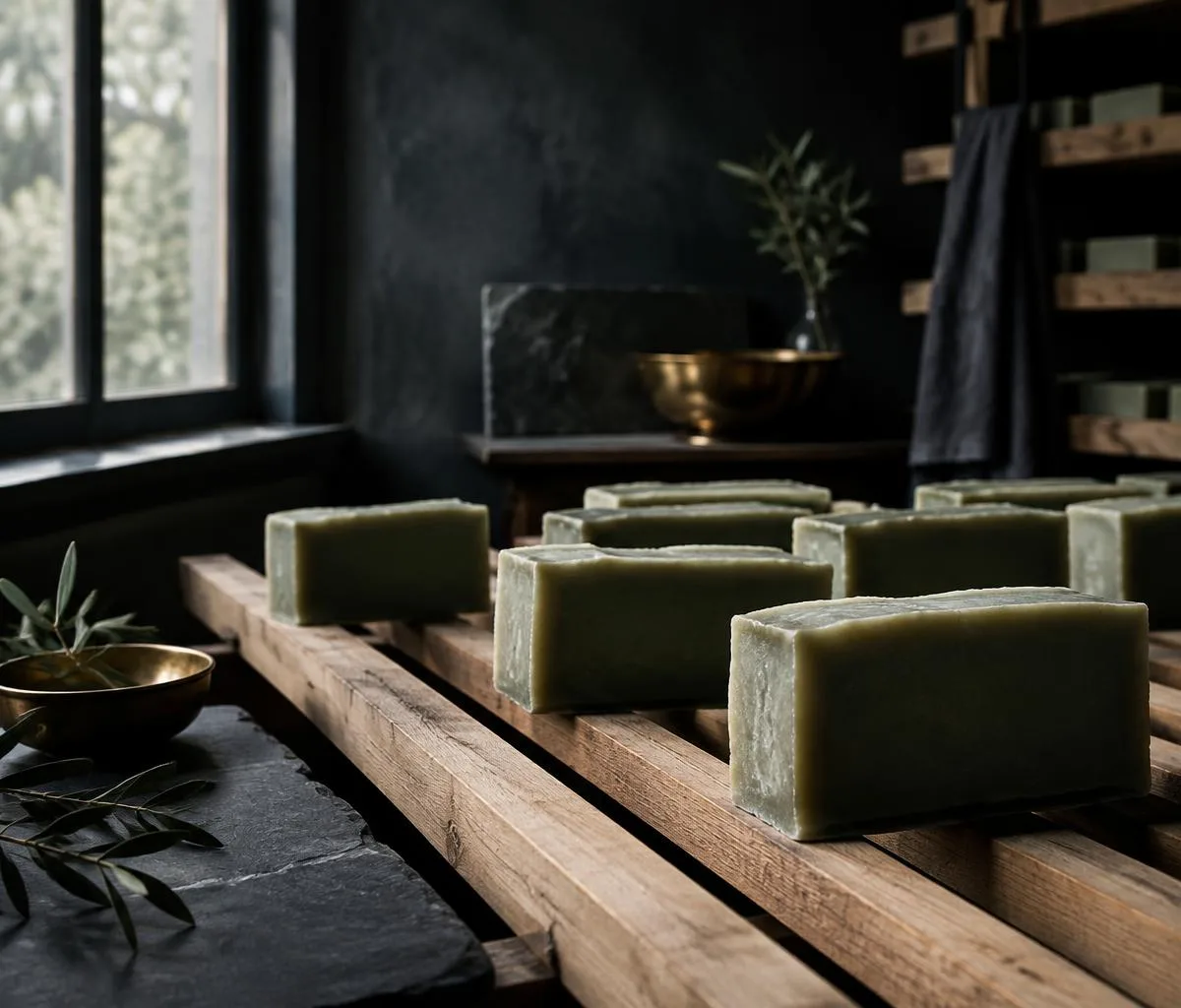
In our workshop, our work begins on timber curing racks lined with heavy parchment, where blocks of saponified oils rest quietly for weeks at a time. A few feet away, glass beakers and stainless steel mixing paddles sit next to carboys of distilled water and jugs of amphoteric and anionic surfactants. Both approaches yield products designed to cleanse the skin, yet their chemistry, physical form, and behavior in water could not be more distinct. The debate between traditional bar soap and modern liquid cleansers is often reduced to crude marketing terms, but the real difference lies in molecular structure, surface chemistry, and mineral interactions.
When we examine these two formulations side by side, we are comparing the salt of a fatty acid with a engineered synthetic detergent. Understanding how each is produced, how it organizes into micelles, and how it behaves across different domestic water supplies allows us to evaluate their performance objectively. Whether one favors the tactile permanence of a cured vegetable bar or the pH-matched fluidity of a bottled cleanser, each has distinct physical consequences for skin physiology and domestic plumbing.
Saponification Basics and Free Fatty Acids
Traditional cold process bar soap is the direct outcome of an exothermic reaction between triglycerides and a strong base. In our studio, we blend plant-derived fats such as olive oil, coconut oil, and shea butter with a solution of sodium hydroxide dissolved in distilled water. When both phases reach roughly 38 to 43 degrees Celsius, we combine them, initiating saponification. The ester bonds connecting the glycerol backbone to the fatty acid chains break, yielding crude glycerol and a mixture of sodium carboxylate salts. We pour the warm, emulsified mass into insulated wooden molds to undergo its gel phase before slicing it into individual bars.
The essential variable in cold process formulation is the superfat, or lye discount. We deliberately formulate recipes with an excess of oil, typically between 4% and 7% beyond what the sodium hydroxide can mathematically saponify. This leaves unreacted triglycerides and free fatty acids dispersed throughout the solid crystalline matrix of the bar. Long-chain saturated fats like stearic and palmitic acids add firmness and a creamy, dense lather, while unsaturated fats like oleic acid contribute to a softer bar that washes away cleanly. These unesterified lipids do not participate in cleansing; instead, they serve as a physical buffer during lathering, moderating the soap's capacity to strip away native skin oils.
After cutting, the bars require a curing window of 4 to 6 weeks. During this period, ambient moisture evaporates, dropping the water content of the block from roughly 28% down to 12% or 14%. This drying causes the crystalline structure of the soap salts to tighten, yielding a hard, long-lasting bar. The resulting cured bar maintains an inherently alkaline pH, generally falling between 9.1 and 10.2. This alkalinity is a structural property of sodium carboxylates: when dissolved in water, the salt hydrolyzes, releasing a minor fraction of hydroxyl ions that cannot be neutralized without breaking the soap back down into free oil.
Synthetic Surfactant Micelle Action
Liquid cleansers rely on synthetic detergents, commonly known as syndets. Instead of reacting whole triglycerides with an alkali, chemists isolate or synthesize specific surfactant molecules derived from petrochemical or oleochemical inputs. These molecules typically include primary anionic surfactants like sodium cocoyl isethionate or sodium laureth sulfate, combined with secondary amphoteric surfactants such as cocamidopropyl betaine, and non-ionic compounds like coco glucoside. In liquid formulations, water makes up roughly 70% to 82% of the total vessel weight, serving as the carrier for these active ingredients.
The core mechanism of grease removal rests on the formation of micelles. Surfactant molecules possess a hydrophilic head with high water affinity and a hydrophobic hydrocarbon tail that repels water. When the concentration of individual surfactant monomers in an aqueous solution crosses a critical threshold, known as the critical micelle concentration (CMC), the molecules spontaneously orient into spherical or cylindrical clusters. The hydrophobic tails turn inward to escape the water, while the hydrophilic heads face outward. These hydrophobic interiors dissolve non-polar substances like hardened sebum, dead cells, and atmospheric pollutants, holding them in colloidal suspension until they are rinsed down the drain.
| Cleanser Category | Primary Molecular Base | Standard Operating pH | Lather Characteristics |
|---|---|---|---|
| Cold Process Bar | Sodium salts of fatty acids (carboxylates) | 9.1 to 10.2 | Dense, cushion-like, lipid-rich lather |
| Liquid Syndet Wash | Isethionates, betaines, or ether sulfates | 5.2 to 5.8 | Flash foam, easily dispersed in cold water |
| Syndet Bar (Combi-bar) | Sulfosuccinates or isethionates with binders | 5.5 to 6.8 | Dense, uniform lather resistant to curdling |
Because synthetic surfactants are not the salts of weak organic acids, their charge and solubility do not collapse in mildly acidic environments. This allows us to adjust liquid formulas down using organic acids like citric or lactic acid to a target pH between 5.0 and 5.8. Because this range mirrors the natural acidity of human skin, liquid syndet cleansers interact with the stratum corneum with minimal initial disturbance to the acid mantle.
Behavior in High Mineral Tap Water
The performance of any wash product depends heavily on the mineral content of the municipal or well water coming out of the tap. Hard water contains elevated concentrations of multivalent mineral cations, primarily calcium (Ca2+) and magnesium (Mg2+). When a traditional cold process soap bar is rubbed into hands using hard water, these dissolved minerals cause an immediate exchange reaction. The sodium ion on the carboxylate group is displaced by calcium or magnesium, forming calcium dicarboxylate, an insoluble precipitate familiar to most people as soap scum.
This precipitate has two immediate consequences:
- It consumes active soap molecules, which forces the user to work the bar longer and consume more material to generate a functional lather.
- It leaves behind a tactile residue. This faint grip or drag felt on the skin after rinsing cold process soap in hard water is not retained skin moisture, but rather microscopically thin deposits of calcium carboxylate salts that resist simple water rinsing.
Liquid synthetic cleansers behave very differently under the same conditions. Most synthetic surfactants feature head groups, such as sulfonates, sulfates, or betaines, that do not form insoluble ionic bonds with calcium and magnesium ions. They remain soluble even when the mineral count exceeds 180 parts per million. As a result, liquid washes generate identical volumes of flash foam regardless of water hardness, and they rinse away cleanly without leaving mineral-soap precipitates behind on plumbing fixtures or on keratinized skin cells.
Skin Barrier Lipid Retention Comparisons
The outermost layer of the skin, the stratum corneum, consists of protein-rich corneocytes surrounded by an intercellular lipid matrix composed of ceramides, cholesterol, and free fatty acids. This lipid matrix maintains the skin's moisture barrier and controls transepidermal water loss (TEWL). Cleansing inevitably disturbs this structure, but cold process soaps and liquid syndet cleansers disrupt it through different chemical pathways.
When exposed to the alkaline environment of cold process soap, the keratin fibers inside corneocytes experience slight swelling. This mechanical swelling, paired with the saponified fatty acid chains, can temporarily mobilize and wash away intercellular lipids, particularly when formulations feature high amounts of short-chain fatty acids like sodium laurate (derived from coconut oil). However, an intentional superfat ratio of 5% to 8% introduces protective, unsaponified fatty acids that soften this extraction effect. For skin with robust barrier function, the skin surface typically recovers its natural acidic baseline within 45 to 120 minutes post-wash through normal secretion of sweat and sebum.
Synthetic syndet cleansers avoid alkaline-induced protein swelling because they can be buffered to match the natural skin pH of roughly 5.5. However, not all syndets are inherently milder. Monomeric surfactant molecules that have not gathered into micelles can penetrate deep into the lipid bilayer of the skin, where they can bind to stratum corneum proteins and cause irritation or dryness. Liquid cleansers formulated with secondary amphoteric surfactants, such as cocamidopropyl betaine or sodium cocoamphoacetate, mitigate this by forming larger, mixed micelles that are physically too bulky to intercalate into the lipid bilayers. Those experiencing atopic dermatitis or compromised barrier function often tolerate a buffered, low-monomer syndet better than an alkaline soap, though individuals should consult a dermatologist when addressing persistent inflammatory skin conditions.
Packaging Footprint and Bar Shelf Life
Evaluating cleansers also requires looking at the physical materials needed to store and ship them. Cold process soap bars are solids with low water activity. Once cured, they are structurally stable and can be packaged in bare, uncoated paperboard boxes or minimalist parchment sleeves. Shipping a carton of soap bars involves moving dense, concentrated active matter without transporting excess water weight. This solid format makes the bar format exceptionally light on packaging waste.
Liquid cleansers, by contrast, are composed largely of water. Transporting liquid washes means expending energy to move heavy volumes of water that will ultimately flow straight out of the domestic supply tap anyway. Furthermore, liquid products require rigid, leak-proof packaging, which typically means high-density polyethylene (HDPE) or polyethylene terephthalate (PET) plastic bottles fitted with composite plastic-and-metal pump dispensers. These multi-component pumps are notoriously difficult to separate and process in municipal recycling streams, resulting in a significantly larger long-term landfill footprint.
Preservation and storage stability follow entirely different rules for each format:
- Cold process bars: The low free-water activity of a cured, dry bar inhibits bacterial and fungal growth without the use of synthetic antimicrobial preservatives. However, bars rich in polyunsaturated plant oils remain susceptible to oxidative rancidity, known colloquially as Dreaded Orange Spots (DOS), if exposed to heat, ultraviolet light, or stagnant water. A well-stored bar can keep for 18 to 24 months in a cool, ventilated space.
- Liquid cleansers: Because they consist primarily of open water with a water activity value near 0.98, liquid washes require broad-spectrum cosmetic preservative systems, such as phenoxyethanol paired with ethylhexylglycerin, or sodium benzoate combined with potassium sorbate. Without these agents, bacterial and fungal pathogens can colonize the bottle within 7 to 14 days of opening. When properly preserved, liquid formulations remain stable on the shelf for 24 to 36 months of lipid oxidation.
Choosing Based on Water Hardness Readings
Rather than deciding between bar soap and liquid syndets based solely on preference, we recommend basing your choice on the measurable water hardness of your household. Water hardness is expressed either in milligrams per liter (mg/L) of calcium carbonate equivalent or in grains per gallon (gpg). You can measure this using inexpensive test strips, an electronic total dissolved solids (TDS) meter, or by reading the annual water quality report provided by your municipal utility.
- Collect a fresh sample of tap water from the bathroom or shower basin in a clean glass container.
- Immerse an analytical test strip for 2 seconds, remove it without shaking off excess water, and hold it level for 30 seconds.
- Match the pad color to the manufacturer reference chart to obtain your reading in mg/L of calcium carbonate.
If your reading registers under 60 mg/L (approximately 3.5 gpg), your water is soft. In this environment, cold process bar soap performs admirably. The low mineral content prevents the formation of insoluble calcium scum, allowing the soap to produce a rich lather that rinses away without leaving a film. The free fatty acids from the superfat can work uninhibited, leaving the skin supple without leaving residue on tub walls.
If your reading measures above 120 mg/L (roughly 7 gpg), your water falls into the hard or very hard category. In these homes, traditional bar soap will frequently curdle on the skin, producing a noticeable drag and requiring more mechanical scrubbing to lift soils. For these users, a liquid cleanser formulated with synthetic or amphoteric surfactants, or a solid syndet combi-bar, will provide a more predictable rinse profile and eliminate the sticky precipitation that happens when true soaps meet dissolved minerals.
Common Mistakes
Over our years working with these materials, we have observed several common mistakes in how people handle and store both product types:
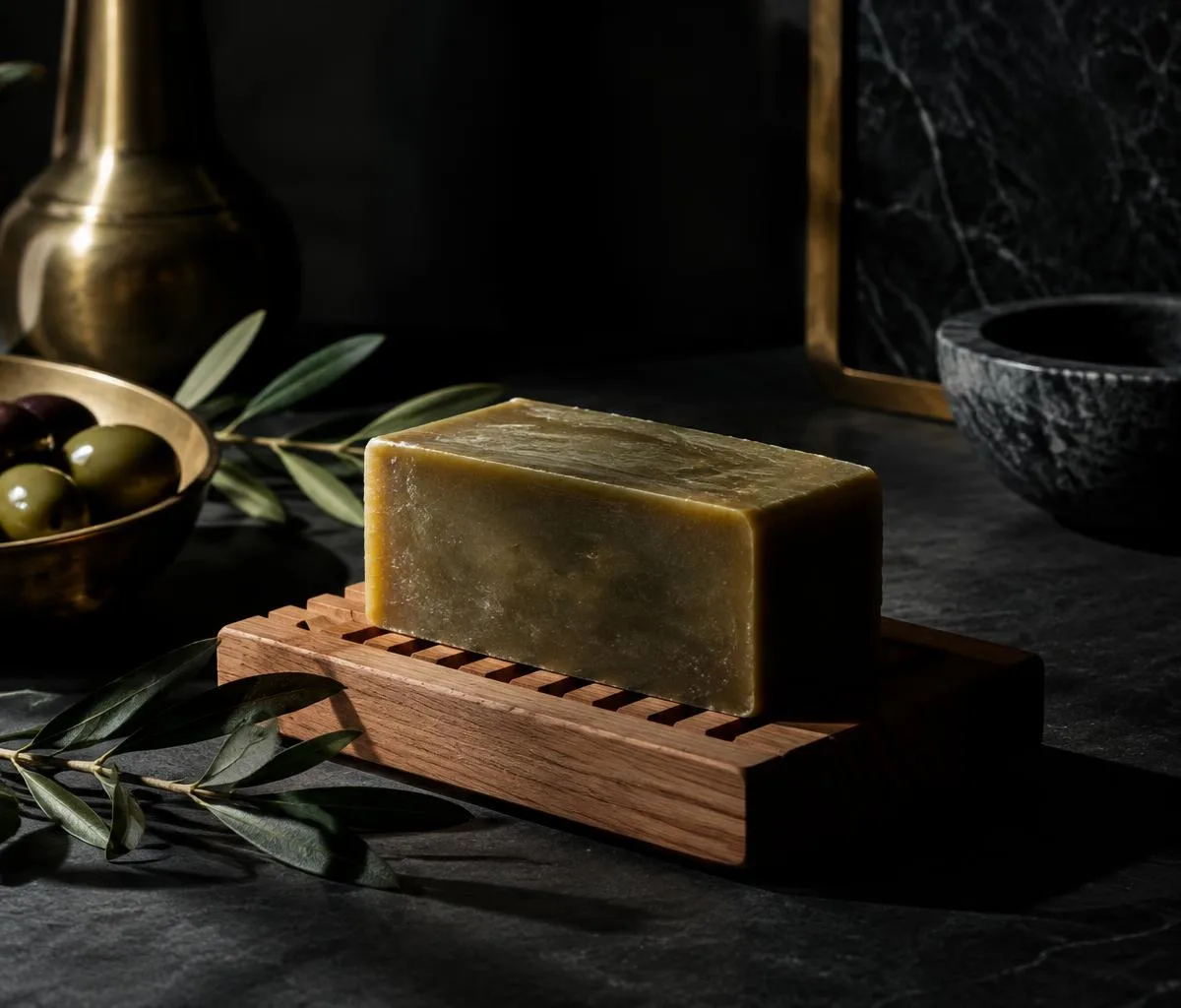
- Allowing bar soap to rest in standing water: A cold process bar left in a flat, undrained soap dish absorbs water, dissolving the crystalline matrix and turning the underside into a soft mush. Always use an open, slatted dish made of wire or ribbed timber that lets air circulate underneath the bar.
- Assuming natural always means mild: True cold process soaps made exclusively with natural plant oils still carry an alkaline pH above 9.0. If formulated with high amounts of coconut or palm kernel oil, the resulting short-chain fatty acids can strip skin lipids aggressively, regardless of their plant origins.
- Using body wash directly on the face: Many liquid body cleansers are formulated with higher surfactant active loads and fragrance percentages to generate abundant foam across large surface areas. Using them on delicate facial skin can cause acute dryness and irritation; facial skin warrants milder, lightly buffered preparations with low surfactant activity.
- Failing to replace shower poufs and sponges: Liquid cleansers rely on physical meshes or sponges to generate lather quickly. If left hanging in a warm, humid shower stall, these fibrous accessories become breeding grounds for bacteria and mold, transferring microbes back onto the skin barrier during cleansing.
Practical Next Steps for the Maker and User
To find the best balance for your own routine, begin by measuring your tap water with a simple test strip. If your water is moderately soft, an artisan-crafted cold process bar made with olive, sunflower, or shea oils and a 6% superfat will provide a luxurious, low-waste cleansing experience that rinses cleanly away.
If you find that your household water runs hard, consider using liquid syndet formulations or solid syndet bars built on sodium cocoyl isethionate. If you formulate your own soaps and wish to use them in hard water areas, experiment by adding a chelating agent to your lye water, such as sodium gluconate at 0.5% or tetrasodium EDTA at 0.2% of total oil weight. Chelators bind trace calcium and magnesium ions before they can react with fatty acid salts, noticeably reducing scum formation.
Finally, let your skin barrier be your guide. If you experience persistent tightness, stinging, or flaking 20 minutes after cleansing, switch to an unfragranced cleanser with a lower surfactant concentration or a higher superfat profile, and consult a qualified dermatologist if irritation or chronic skin issues persist.
This publication provides educational material care notes: consult a certified dermatologist or public health officer for clinical advice. Disclaimer