 Lavare Journal
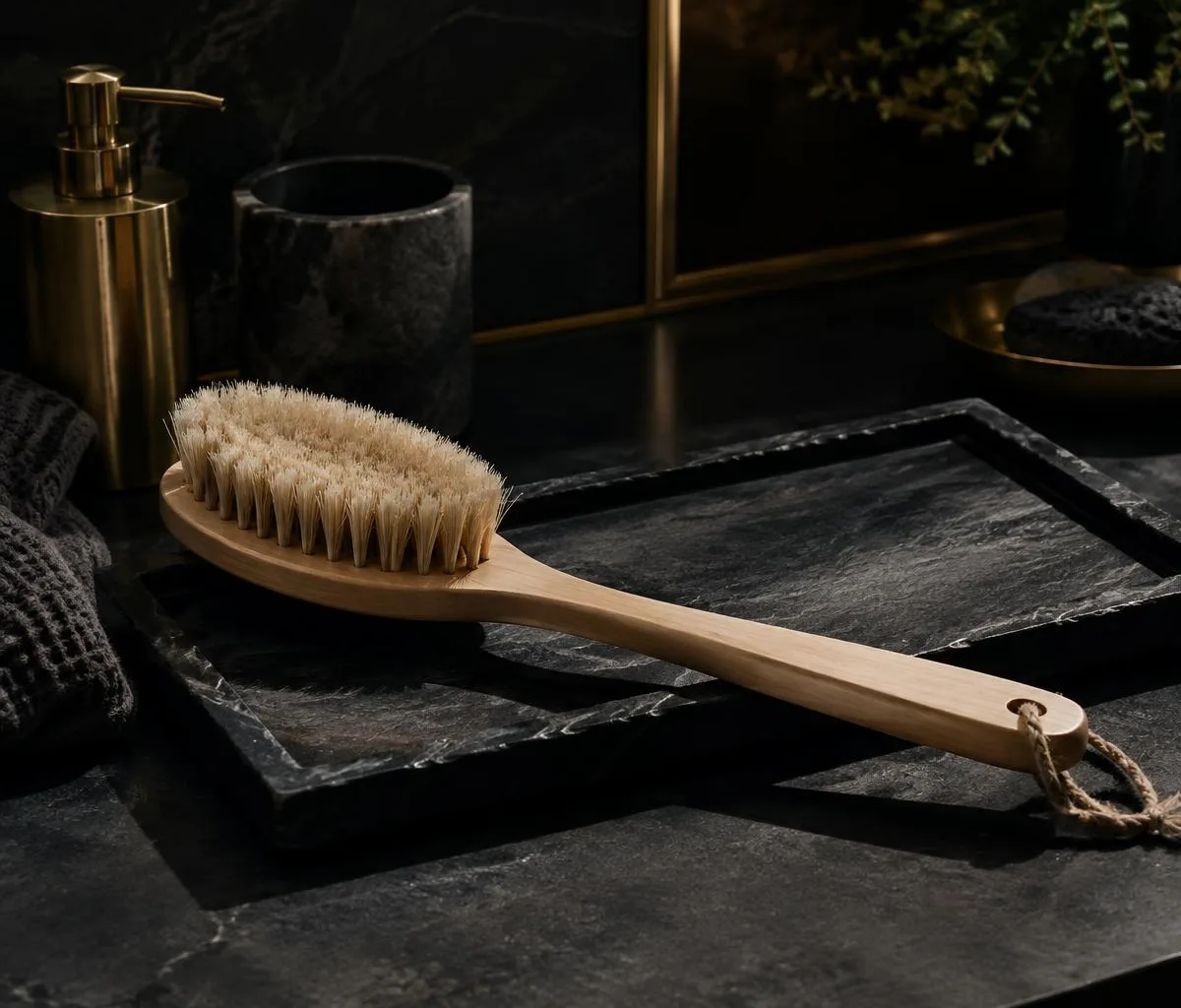
Learn how to keep natural bristle brushes dry, clean, and free from mildew between scrub sessions. You will extend the working life of turned beechwood handles while preventing bacterial buildup.

- Bristles dry best when suspended facing downward in moving air.
- Periodic saline soaking eliminates bath oil residue from the wooden brush head.
- Raw wood handles require thin coats of walnut or linseed oil to resist split seams.
When we pick up a dry bath brush, we feel the work of two distinct organic structures joined by hand. The handle and head come from dense, close-grained hardwoods like beech, oak, or pear, turned on a lathe or cut on a bandsaw and sanded until smooth to the palm. Set into that timber are hundreds of natural boar bristles, grouped into neat tufts. Each bristle carries a textured surface of microscopic keratin shingles, tapering naturally from a firm root to a split, softer flag at the tip. These fibers behave much like our own hair: they absorb water, swell under damp heat, hold onto fats and skin cells, and contract as they dry.
Because these tools spend their working lives inside wet, humid bathrooms, they face continuous stress. Water creeps into the boreholes where the tufts are seated, capillary action draws moisture deep into the grain of the wood, and dead keratin trapped near the base becomes food for mildew. Caring for a boar bristle brush is not an elaborate ritual, but it does ask for patience, careful observation, and respect for natural materials. When we tend to the bristles and the timber correctly, a well-made brush will serve quietly at the sink and bath for years.
Anatomy of Natural Bristle and Wood Joinery
To keep a brush sound, we first need to understand how the components meet beneath the surface. Natural boar bristle is an animal fiber composed predominantly of keratin. Unlike synthetic nylon filaments, which are smooth, solid cylinders of extruded plastic, boar hair is porous. It possesses a central canal, or medulla, surrounded by a cortex and an outer sheath of overlapping scales. These cuticles create friction, sweeping away dead stratum corneum and distributing skin oils, but they also capture soap curd, bath minerals, and sebum. When wet, the bristle absorbs up to twenty percent of its dry weight in water, softening noticeably and swelling inside its socket.
The brush maker fastens these tufts into the wooden stock using one of two traditional methods. In wire-drawn brushes, the craftsperson threads continuous loops of brass or stainless steel wire through tiny pilot holes from the back of the brush plate, loops the wire around the center of a folded bristle bundle, pulls it taut into the hole, and secures it. A secondary backplate is then glued over the wire channels to seal them. In machine-punched or resin-set brushes, a small metal staple drives each folded tuft into a blind hole, or the tufts are cast directly into an epoxy bed set inside a carved wooden cavity. Each construction style has vulnerabilities:
| Construction Style | Mechanical Anchor | Primary Water Risk | Drying Behavior |
|---|---|---|---|
| Wire-drawn plate | Continuous brass or copper wire | Water trapped between glued wood laminates causes glue line failure | Drains well through tuft bases, but slow to dry along the interior glue line |
| Staple-set blind hole | Nickel-plated steel or brass staple | Moisture sits in the dead-end hole, rusting steel and softening wood fibers | External drying is quick, but stagnant water lingers deep in the socket |
| Resin-poured timber | Epoxy or polyurethane plug | Wood expands away from the rigid resin ring, creating hairline fissures | Bristle roots remain dry, but surrounding wood cheeks can split under tension |
Hardwoods like European beech and white ash are selected for brush stocks because their medullary rays and tight grain resist splintering. However, wood is hygroscopic. When the wood grain absorbs bathwater, it expands across its width rather than its length. If the face of the brush gets drenched while the dry back remains parched, the timber warps, producing surface checks and loosening the grip on the bristle tufts. Preserving the joinery means keeping the timber as dry as possible, even while the bristles do their wet work.
Shaking Out Moisture After Every Bath
The critical window in brush maintenance occurs in the two minutes immediately following use. When we step out of the tub or shower, the brush head carries soap-laden water trapped by surface tension between the thousands of tightly packed hairs. If we simply rest the brush flat on a shower ledge or hang it by its cord against damp tile, that water pools into the boreholes. The wood around each tuft remains saturated for twenty-four hours or longer, beginning the anaerobic decay of the root fibers.
We begin the daily clearing by rinsing the bristles thoroughly under a gentle stream of lukewarm tap water. We keep the stream angled downward across the tips, never directing hot water straight onto the wooden face. Once the lather is rinsed clean, we hold the brush firmly by its handle, step into the empty tub, and flick our wrist sharply downward several times. This centripetal snap drives the standing water out from between the bundles. We repeat this motion four or five times until droplets stop flying from the tips.
Next, we pass the bristle face across a clean, dry cotton bath towel. We use a light sweeping stroke, dragging the bristles back and forth across the terrycloth without crushing them sideways. The cotton draws out the lingering surface moisture through simple wicking action. Finally, we rest the brush in a well-ventilated room, away from the humid microclimate of the shower stall. We always lay the brush with the bristles facing downward on an open wire or slatted rack, or suspend it handle-up. Drying the brush bristle-down ensures that any remaining dampness travels down the shaft toward the tips and evaporates into the air, rather than sinking inward toward the timber joinery.
Weekly Cleansing with Dilute Castile Soap
Even with careful daily flicking, natural bristles accumulate a film of shed skin proteins, bath oils, and lime scale within six to eight uses. This accumulation coats the cuticles, making the hair limp and creating an environment where bacteria take hold. Once a week, we wash the working tufts to restore their natural spring.
We mix our cleansing solution in a shallow ceramic dish or wide-rimmed bowl:
- Pour approximately 150 milliliters of warm tap water into the dish, keeping the temperature around 35 to 40 degrees Celsius. Hot water strips the natural oils from the bristle and softens wood glue.
- Add five milliliters of plain, unscented liquid castile soap. Castile soap uses vegetable fats that clean without harsh detergents, preserving the structural integrity of the keratin.
- Swirl the water with your fingertip until a light lather forms. Avoid scented soaps containing heavy essential oils or synthetic foam boosters, which leave a gummy residue on the hair.
We introduce only the bristles to the bath. We lower the brush face into the dish so the water level covers two-thirds of the bristle length. Under no circumstance do we let the water reach the wooden block. We work the brush in slow, circular motions against the bottom of the dish for sixty seconds. The agitation pumps the soapy fluid up into the middle sections of the tufts, dissolving trapped sebum and releasing loose dead skin flakes.
To rinse, we empty the dish and refill it with clean, cool water. We repeat the gentle swirling motions, swapping the water two or three times until no bubbles rise from the bundles. After the final rinse, we comb through the bristles with a wide-tooth horn or wooden comb, moving from the base toward the tips to align the fibers and dislodge any tangled hairs. We finish with our standard flicking and towel-blotting routine.
Deodorizing and Sanitizing Bristle Bunches
A natural brush should smell of clean animal fiber and seasoned wood, similar to raw wool and damp sawdust. If a sour, fungal, or musty odor develops, it indicates that microflora are metabolizing residues trapped near the wire anchors. When soap alone fails to clear this scent, we apply a gentle sanitizing treatment using mild household acids or botanicals.
White distilled vinegar provides a reliable, low-impact sanitizer. We prepare a solution of one part five-percent acidity white vinegar to four parts filtered water in a shallow tray. Just as with the castile wash, we dip only the upper portion of the bristle bundles into the liquid, keeping the wood completely clear of the acidic bath. The acetic acid dissolves stubborn calcium soap scum (calcium stearate) and lowers the pH, halting fungal growth. We allow the bristles to rest in this solution for no more than ten minutes. Prolonged acid exposure will weaken both the keratin fibers and the brass anchoring wires.
For persistent odors, three drops of pharmaceutical grade tea tree (Melaleuca alternifolia) oil can be dispersed into 200 milliliters of warm rinse water. Tea tree oil contains terpinen-4-ol, which offers broad antimicrobial action against common bathroom fungi like Trichophyton and Aspergillus. After dipping the bristles through the tea tree water, we rinse them with fresh tap water to prevent any concentrated oil from contacting the wood finish, which might otherwise spot or soften the resin.
Once rinsed, place the brush on a windowsill that receives indirect daylight and fresh air. A short period of bright daylight helps inhibit bacterial replication, but we keep the brush out of direct, baking sunlight. Harsh solar radiation dries the timber too rapidly, causing the wood cells to shrink unevenly and split along the grain lines.
Conditioning Wood Backing with Drying Oils
The wooden stock of a bath brush endures constant cycling between atmospheric dampness and household dryness. Over two or three months, the protective finish applied by the maker gradually leaches away, leaving the wood face pale, dry to the touch, and susceptible to water staining. To maintain the timber's resilience, we periodically apply a true drying oil.
We work with pure drying oils such as raw linseed oil, pure cold-pressed tung oil, or food-contact walnut oil. We strictly avoid non-drying mineral oils, paraffin oils, and kitchen vegetable oils like olive or canola. Mineral oil never polymerizes, remaining greasy and attracting lint; culinary oils lack double chemical bonds and will turn rancid inside the timber pores, imparting a rancid fat smell to the brush. Pure tung oil or raw linseed oil penetrates into the cellulose network, reacts with atmospheric oxygen over several days, and support into an elastic, water-resistant solid resin within the wood fibers.
We apply the oil only when both the wood and bristles are thoroughly bone-dry, ideally forty-eight hours after the brush was last used:
- Apply a small puddle of oil, roughly the size of a five-cent coin, directly onto the wooden back.
- Using a lint-free scrap of cotton muslin or an old linen rag, rub the oil into the wood, following the direction of the grain. Work the oil around the edges, over the handle, and between the exterior bristle rows with the tip of a finger wrapped in cloth.
- Be meticulous not to smear oil into the center of the bristle tufts. Oil trapped on the hair makes the fibers limp, gummy, and ineffective at dry brushing or washing.
- Allow the timber to absorb the oil for thirty to forty minutes.
- Take a clean, dry section of cloth and vigorously buff the entire wooden surface until it feels dry to the skin. No wet oil should remain pooled on the surface.
Set the brush on a shelf in a well-ventilated room to support forty-eight hours before exposing it to water. During this window, the oxygen cross-links the oil molecules, restoring the timber's golden depth and water-shedding properties.
Signs of Deep Fiber Rot and When to Retire a Brush
Even with attentive care, natural tools have an organic life cycle. A brush is subjected to mechanical friction, warm water, and human skin friction every time it is picked up. Over months and years, the material will tell us when its structure has reached the end of safe, functional utility.
We monitor the base of the tufts closely during our weekly wash. The first warning of internal decay is a dark gray or inky black discoloration spreading out from the boreholes into the surrounding wood. This is not surface dirt; it is the fruiting stage of deep-seated wood-decay fungi living on stagnant moisture inside the socket. If pressing on the wood around the tuft feels soft, spongy, or yields a drop of dark water, the structural integrity of the block has failed.
We also watch the behavior of the bristles themselves. A healthy boar bristle flexes with springy resistance and returns straight when released. As the keratin ages and degrades through repeated wet-dry cycles, it undergoes fiber fatigue:
| Observation | Material Cause | Action Required |
|---|---|---|
| Bristle tips curling into corkscrews | Keratin structural breakdown from excessively hot water | Trim tips slightly with sharp shears; keep bath water cooler |
| Tufts pulling free intact with metal staple attached | Wood rot inside borehole; loss of mechanical bite | Retire brush; joinery is no longer sound or safe against skin |
| Blackening along the bottom millimeter of bristles | Anaerobic mold colonization at the root block | Treat once with vinegar; if odor and rot remain, retire brush |
| Check cracks extending through the timber from hole to hole | Stress fatigue from timber swelling and rapid shrinking | Retire brush; timber harbors microbes and may snap under use |
| Bristles snap off midway down the shaft during use | Severe desiccation of the cortex, loss of natural moisture | Brush has reached end of life; fiber can no longer be reconditioned |
When the bristles shed continuously, lose their elasticity, or harbor persistent fungal blooms that return within forty-eight hours of sanitizing, the tool should be retired. Continuing to use a rotting brush transfers mold spores and broken, jagged fiber shafts across the skin, which can irritate sensitive dermis. If you have an active skin infection, broken skin, or chronic dermatological conditions, consult a physician or dermatologist before using any natural body brush.
Common Mistakes to Avoid
In our workshop, we frequently see good brushes ruined prematurely by a few simple habits. Avoiding these errors will immediately extend the working life of any natural body tool:
- Submerging the entire head in water: Soaking a brush in a filled tub causes the wood to swell instantly, loosening wire staples and warping the face. Keep the timber above the water line as much as possible.
- Storing inside the shower stall: Leaving a brush hanging from the shower valve or resting on a tile niche guarantees it will never dry. The relative humidity in a closed stall remains near saturation for hours, promoting mold growth within the boreholes.
- Drying on a household radiator or with a hair dryer: Forcing heat onto a damp brush drives moisture out of the outer layers faster than the interior can equalize, causing immediate, catastrophic timber splitting. Let evaporation happen at room temperature.
- Using bleach or harsh laundry disinfectants: Chlorine bleach dissolves animal hair by breaking the disulfide bonds in keratin. Within minutes, it turns resilient boar bristle into a mushy, disintegrating sludge.
- Applying paste waxes or mineral grease: Waxes seal the timber surface without penetrating, trapping residual dampness underneath the coating and accelerating wood decay from the inside out.
Practical Next Steps for Your Brush
Begin by evaluating your brush today. Take it into natural light and inspect the wood between the tufts. If the grain feels dry, powdery, or looks pale gray, schedule an oiling this weekend using a small drop of pure tung or raw linseed oil, letting it cure completely before its next bath.
Next, examine your bathroom setup. Find a drying location outside the humid shower enclosure where air moves freely, such as near an open doorway, on a slatted wood caddy across a dry tub, or suspended by its lanyard from a peg in a hallway. Establish the habit of the flick-and-towel clearing after every single bath. With these quiet, simple hand motions, you protect the maker's joinery, care for the natural bristles, and keep a humble organic tool working beautifully for years to come.
This publication provides educational material care notes: consult a certified dermatologist or public health officer for clinical advice. Disclaimer