 Lavare Journal
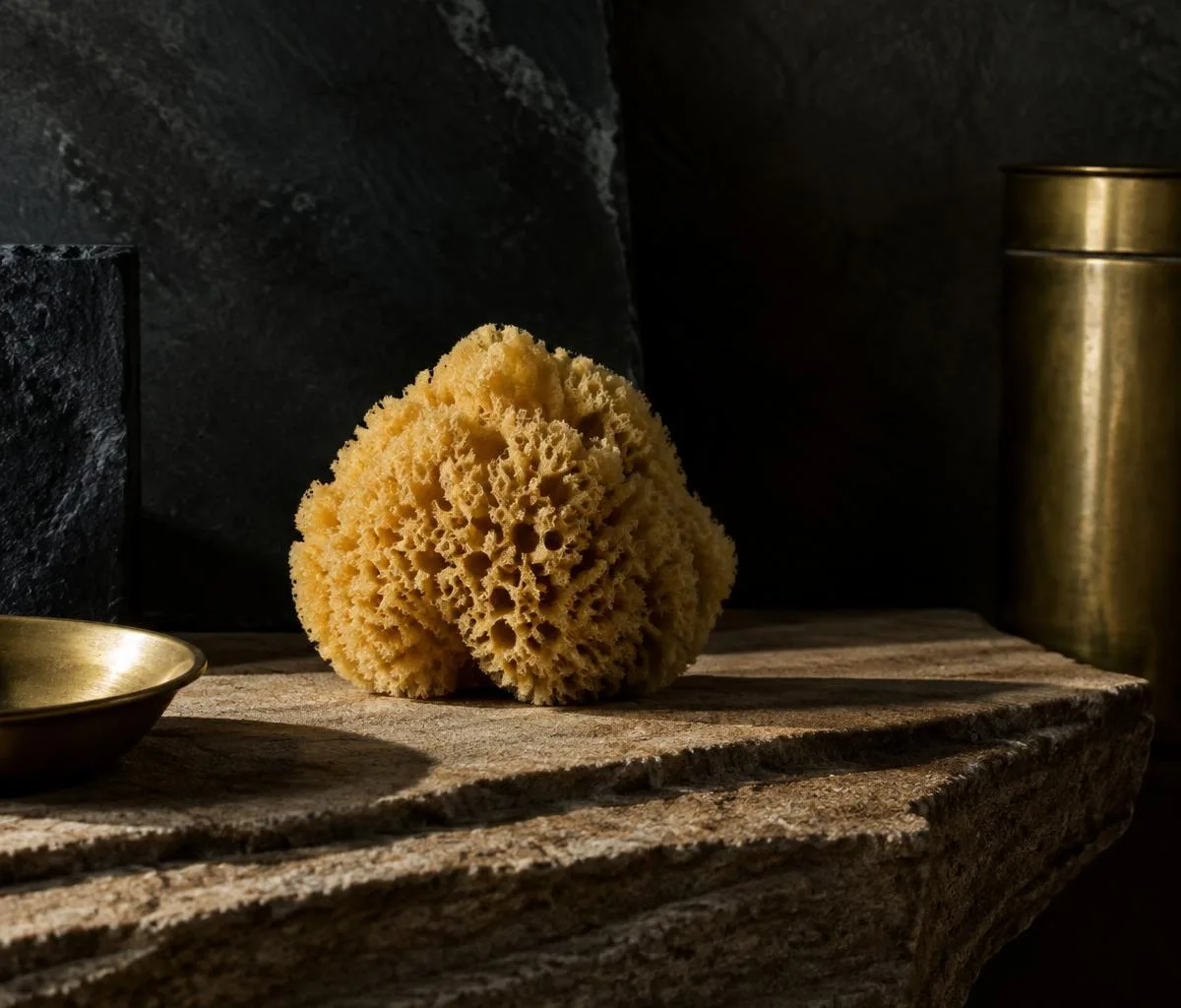
Discover how to clean delicate marine sponges without damaging their structural collagen fibers. You will keep your wash tools supple, odorless, and thoroughly hygienic through gentle mineral soaks.

- Boiling water degrades natural spongin protein and shrinks the sponge permanently.
- A soak in dilute vinegar or baking soda removes stubborn soap and skin sediment.
- Air circulation in an open mesh basket prevents center rotting.
In our workshop, we handle natural sea sponges with the same reverence we grant to seasoned hardwood and hand-spun linen. Taken from Mediterranean beds or the shallow banks of the Gulf of Mexico, these organisms are marine animals, harvested carefully by divers who cut the base while leaving enough tissue intact for the colony to regenerate. When wet, a quality wool or silk sponge transforms in the hand, yielding a soft, buoyant mass capable of holding a dense volume of water and lather. Unlike synthetic foams punched from petroleum derivatives, no two harvested skeletons share the exact same pore distribution or grain.
Because they are biological skeletons rather than synthetic polymers, sea sponges require deliberate care to remain hygienic in warm, humid bathrooms. Sloughed skin cells, soap curds, body oils, and mineral precipitates from tap water collect within the inner channels. If left damp and uncleaned, these entrapped residues cultivate colonies of bacteria and mold that weaken the fibrous matrix and sour the scent. Caring for a natural sponge is a quiet, rhythmic craft. Through gentle acid baths, alkaline rinses, and proper air drying, we can preserve the strength of the collagenous network for many months of daily bathing.
The Cellular Architecture of Spongin Fibers
To understand how to clean a sea sponge without destroying it, we must examine what remains once the living cells are washed away after harvest. The sponge we hold at the basin is the porous exoskeleton of an animal belonging to the phylum Porifera. This skeleton is composed almost entirely of spongin, a modified, sulfur-rich collagen protein. Spongin fibers weave through three dimensions, forming an intricate maze of chambers and canals known as the incurrent and excurrent system. In life, the sponge pumped water through these passages to filter plankton; in the bath, this same architecture draws in water by capillary action, creating rich surface tension and dense lather.
Unlike cellulose plant sponges or synthetic polyurethane, spongin fibers possess remarkable tensile elasticity when saturated. They flex, compress, and rebound under hand pressure without snapping. However, this biological protein structure shares chemical vulnerabilities with wool, silk, and human hair. Strong oxidizers disrupt the disulfide bonds cross-linking the protein strands, while prolonged heat denatures the peptide chains. When spongin denatures, the matrix loses its resilience. The sponge becomes slimy to the touch, sheds small flecks, and eventually collapses into a brittle crumb.
The labyrinthine interior also means that soil does not sit merely on the surface. Water paths run deep into the core. A rinse under running tap water clears the outermost cavities, but the deep micro-canals retain trace amounts of body tallow, sebum, and alkaline soap residues. Effective sanitation therefore depends not on violent surface abrasion, but on capillary soaking: introducing balanced liquid solutions that travel throughout the whole internal labyrinth by passive absorption, breaking down organic binders without corroding the protein walls.
Common Mistakes: Bleach and Boiling Water Hazards
When bathers first notice a musty scent or discoloration on their sponge, their initial impulse is often aggressive sterilization. We see well-intentioned individuals reach for chlorine bleach or dunk the sponge into a kettle of boiling water. Both methods cause immediate structural catastrophe. Chlorine bleach is an unsparing oxidizing agent that cleaves the peptide backbone of spongin. Within minutes, bleach chemically burns the fine connective filaments. The sponge may look clean and pale, but its walls are rendered gummy, porous, and prone to disintegrating under light squeeze pressure.
Boiling water presents an equally destructive mechanical hazard. Exposure to temperatures exceeding 60 degrees Celsius shrinks and cooks the collagenous proteins, much like frying an egg. The fibers shrivel and harden into tight, abrasive knots. Once boiled, the sponge permanently loses its soft hand and ability to hold water. Microwave treatment, often recommended for kitchen synthetic sponges, is similarly unsuitable. Microwaving creates dry thermal hot spots that singe the inner chambers and warp the overall form.
| Sanitation Method | Effect on Spongin Protein | Impact on Sponge Lifespan | Suitability for Natural Sponges |
|---|---|---|---|
| Dilute Chlorine Bleach | Cleaves disulfide bonds; dissolves micro-filaments | Destroys structure in 1 to 3 applications | Unsuitable |
| Boiling Water (100°C) | Denatures collagen; causes irreversible shrinkage | Renders material stiff and brittle immediately | Unsuitable |
| Microwave Heating | Creates uneven thermal scorching in dry pockets | Burns interior; causes tearing within weeks | Unsuitable |
| Dilute Acetic Acid (Apple or White Vinegar) | Dissolves mineral scale; preserves fiber flexibility | Maintains elasticity over many months | Recommended (Bi-weekly) |
| Sodium Bicarbonate Bath | Saponifies oils; removes acidic odor residues | Restores neutral pH and loft safely | Recommended (Bi-weekly) |
We also advise against using concentrated laundry detergents, enzymatic stain removers, or fabric softeners. Detergent additives coat the microscopic pores with synthetic fragrances and silicone films that prevent natural drainage and attract mildew. Plain warm water and mild, food-grade household inputs remain the safest tools for the cleansing basin.
De-Mineralizing with Dilute Acetic Acid Soaks
Over several weeks of regular use, calcium and magnesium carbonates from domestic tap water settle into the sponge. These hard water minerals bond with fatty acids from body soaps, forming insoluble lime soaps that stiffen the fiber junctions. When you notice that a thoroughly wet sponge feels rough or chalky rather than silken, mineral encrustation is the primary cause. A dilute acetic acid soak dissolves these mineral bridges cleanly while restoring natural acidity to the spongin fibers, which thrive in a slightly acidic environment near pH 5.5.
To de-mineralize your sponge, prepare the following bath every two to three weeks:
- Rinse the sponge thoroughly in lukewarm water (around 32 degrees Celsius) to flush loose lather and grime from the open chambers.
- Fill a ceramic or glass basin with two cups of warm water. Add two tablespoons of raw apple cider vinegar or distilled white vinegar containing 5 percent acetic acid. Avoid metallic bowls, as reactive metals can discolour the sponge fibers over time.
- Submerge the sponge completely. Compress it three or four times beneath the surface to drive air out of the deep chambers, allowing the dilute vinegar solution to flood every canal.
- Let the sponge rest in the acid bath for 15 to 20 minutes. Do not leave it submerged for hours; excessive prolonged acid contact can gradually weaken protein bonds.
- Remove the sponge and flush it under cool running water until the tart aroma of the vinegar disappears. Gently press the sponge between flat palms to express the rinse water. Never twist or wring the body, as torsional shear stresses tear inner structural walls.
This simple acid treatment strips lime scale and breaks up stubborn grease deposits. It leaves the spongin filaments flexible, clean, and primed to absorb lather evenly during the next bath.
Baking Soda Baths to Neutralize Stale Odors
While an acid soak addresses mineral crusts and preserves protein health, periodic alkaline soaks with sodium bicarbonate tackle stubborn, sour odors caused by rancid sebum and accumulated fatty acids. Odor-causing bacteria metabolize trapped skin oils into butyric and isovaleric acids. A mild sodium bicarbonate bath neutralizes these compounds by chemical conversion, pulling them out of the fibers without stripping the natural organic waxes that lend sea sponges their resilience.
We recommend alternating the vinegar soak with a baking soda bath on a fortnightly rhythm, performing one process one week and the other the next. Prepare the bath using this sequence:
- Dissolve one heaping tablespoon of pure sodium bicarbonate into two cups of lukewarm water, stirring until the crystals vanish completely.
- Immerse the clean, damp sponge into the basin. Squeeze it several times so the alkaline solution fills the interior pores.
- Allow the sponge to soak undisturbed for 20 minutes. The mild alkalinity gently saponifies any stale surface oils lodged within the maze.
- Lift the sponge from the bath and rinse it thoroughly with clean water. You will notice that the fibers feel slightly softer and the musty cellar note has cleared completely.
Take care never to combine vinegar and baking soda together in the same cleansing bowl. While the fizzy reaction looks energetic, the acid and base simply neutralize each other into water and trace salts, eliminating the specific benefits that each substance offers to the spongin matrix when used separately.
Drying and Air Suspension to Prevent Mildew
The most thorough sanitizing routine will fail if the sponge remains sodden between daily cleansings. Moisture trapped within a dense matrix provides an ideal nursery for environmental fungi and bacterial biofilm. The single greatest enemy of a natural sponge is resting flat on a solid surface, such as a tile shelf, plastic soap dish, or porcelain ledge. In these resting positions, the underside never encounters moving air, staying wet for days and turning grey with mildew.
Proper drying requires complete three-dimensional air circulation. After every daily use, rinse the sponge clean of all soap suds under running water. Squeeze out the excess moisture by cupping the sponge between your open palms, compressing it inward with firm, even force. Avoid pinching individual sections with your fingertips, which creates pinpoint micro-tears in the outer walls.
Once pressed, suspend the sponge. A natural linen or cotton cord threaded through the denser root base of the sponge allows it to hang freely from a hook. Alternatively, place the sponge upon an open slatted wire rack or an open-mesh drying basket situated outside the damp shower stall. Air movement in a ventilated room pulls moisture out of the outer walls through evaporation, which in turn draws moisture from the core outward via wicking. Within 8 to 12 hours, the sponge should feel firm and crisp to the touch. This daily return to dry rigidity is the natural mechanism that prevents mildew from gaining a foothold in the fiber network.
Assessing Sponge Wear and Knowing When to Compost
Even with patient care, a natural sea sponge will not last forever. Depending on water hardness, handling, and frequency of use, a dense wool sponge typically serves well for 6 to 12 months, while softer silk sponges may show fatigue around 4 to 8 months. Recognizing the difference between normal maturation and sanitary failure ensures that you clean your skin safely without harboring compromised tools.
Normal wear manifests as gradual soft fraying along the edges and a natural darkening or lightening of the golden-amber hue. However, specific structural markers tell us when a sponge has reached the end of its useful life in the bath:
- Internal crumbling: When gentle compression releases small, gritty fragments or clumps of fiber into the wash water, the structural spongin has degraded beyond repair.
- Persistent sliminess: If a sponge feels slick, gelatinous, or slippery when wet, even after an acid soak, bacterial biofilm has established deep colonies within the matrix.
- Permanent dark spotting: Black, deep brown, or speckled grey stains that persist through vinegar treatments indicate fungal hyphae that have embedded into the protein fibers.
- Structural hollowing: When the core of the sponge softens and collapses, leaving only an empty outer shell, water retention drops and tearing becomes inevitable.
When your sponge exhibits these signs, do not throw it into the trash can. Because it is unadulterated marine protein, a natural sponge is entirely biodegradable. Cut the worn sponge into small pieces with kitchen shears and bury them in your garden soil or outdoor compost pile. The fibers decompose over 8 to 12 weeks, releasing valuable nitrogen, sulfur, and organic matter into the earth, returning the sea-grown tissue to the soil cycle.
Routine Maintenance and Daily Rhythm
Maintaining a natural sponge requires minimal time when integrated into your daily and weekly habits. Treat the sponge not as an industrial scrubbing pad, but as an heirloom tool made of natural fiber. The practical care rhythm follows a straightforward cycle:
- Daily: Thoroughly rinse soap lather out with lukewarm water after bathing. Compress flat between hands. Hang by a breathable cord in a well-ventilated space to dry completely before the next use.
- Every Two Weeks: Submerge in a dilute vinegar soak (two tablespoons per two cups of water) for 15 minutes to clear mineral crusts and reset fiber acidity. Rinse well.
- Alternate Weeks: Submerge in a sodium bicarbonate soak (one tablespoon per two cups of water) for 20 minutes to lift stale skin oils and prevent musty odors. Rinse well.
- Seasonally: Inspect the core density, fiber elasticity, and overall structural integrity. Trim frayed outer edges with fine scissors if needed to prevent tearing.
If you experience persistent skin irritation, contact dermatitis, or unusual rashes after bathing, set the sponge aside immediately and consult a dermatologist. While natural sponges are gentle on sensitive skin, compromised bath tools can harbor microbes that irritate inflamed or broken skin barriers. With attentive handling and thoughtful maintenance, your natural sea sponge will provide a calm, tactile bathing experience while honoring the living ocean beds from which it came.
This publication provides educational material care notes: consult a certified dermatologist or public health officer for clinical advice. Disclaimer